German digital edition
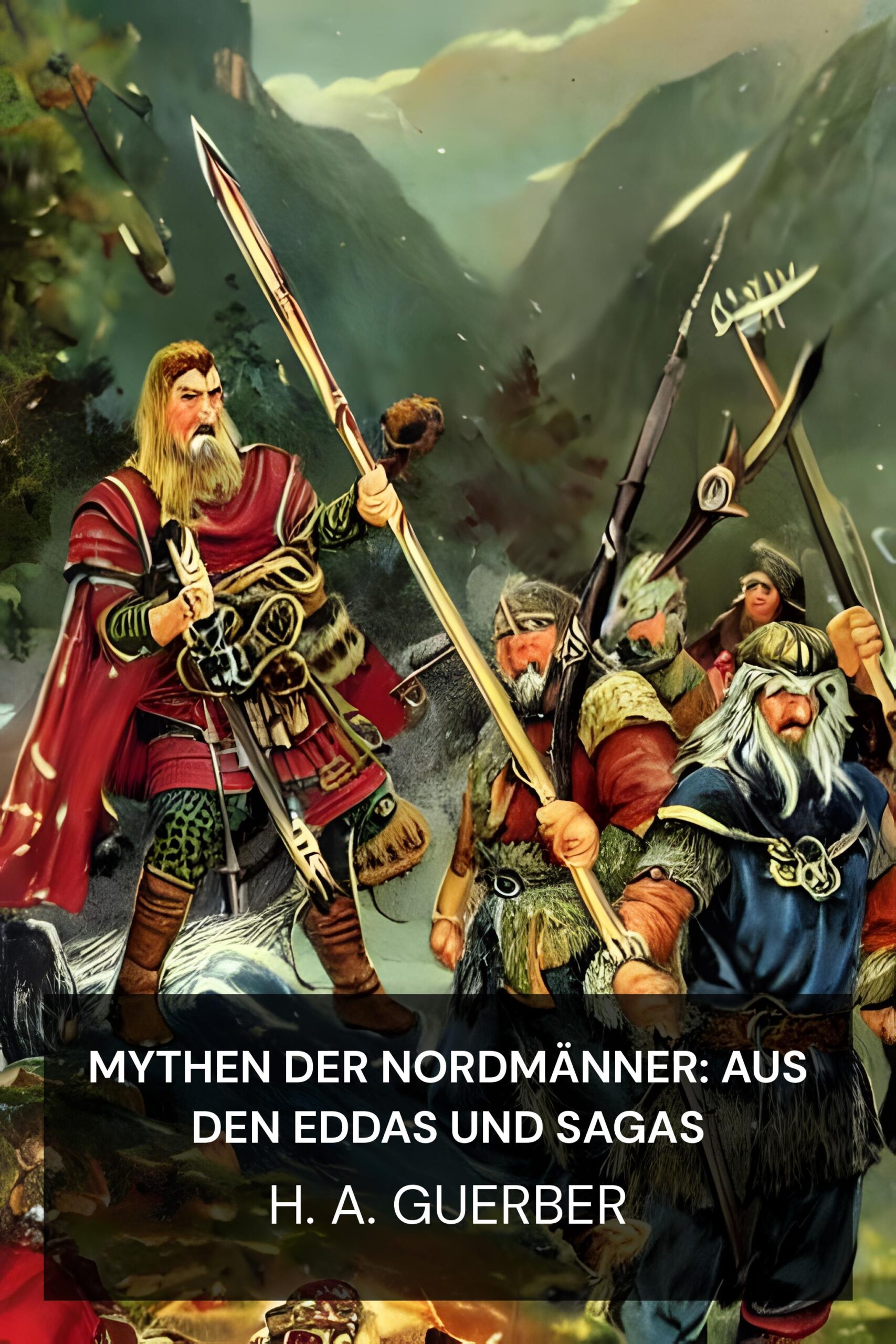
Mythen der Nordmänner: Aus den Eddas und Sagas
by H. A. Guerber
Myths of the Norsemen: From the Eddas and Sagas – Deutsch
€ 2,99 incl. VAT
„Mythen der Nordmänner: Aus den Eddas und Sagas“ von HA Guerber ist…
Sicher bezahlen · MwSt. inklusive · Download nach Zahlung
5 Downloads innerhalb von 14 Tagen nach dem Kauf
Bestellung ergänzen
Mehr von diesem Autor Weitere E-Books von H. A. Guerber Wähle bis zu 2 ergänzende E-Books — je € 1,00
Leseprobe öffnenLies vor dem Kauf einen Auszug.
The prime importance of the rude fragments of poetry preserved in early Icelandic literature will now be disputed by none, but there has been until recent times an extraordinary indifference to the wealth of religious tradition and mythical lore which they contain. The long neglect of these precious records of our heathen ancestors is not the fault of the material in which all that survives of their religious beliefs is enshrined, for it may safely be asserted that the Edda is as rich in the essentials of national romance and race-imagination, rugged though it be, as the more graceful and idyllic mythology of the South. Neither is it due to anything weak in the conception of the deities themselves, for although they may not rise to great spiritual heights, foremost students of Icelandic literature agree that they stand out rude
and massive as the Scandinavian mountains. They exhibit “a spirit of victory, superior to brute force, superior to mere matter, a spirit that fights and overcomes.”1 “Even were some part of the matter of their myths taken from others, yet the Norsemen have given their gods a noble, upright, great spirit, and placed them upon a high level that is all their own.”2 “In fact these old Norse songs have a truth in them, an inward perennial truth and greatness. [xii]It is a greatness not of mere body and gigantic bulk, but a rude greatness of soul.”3 The introduction of Christianity into the North brought with it the influence of the Classical races, and this eventually supplanted the native genius, so that the alien mythology and literature of Greece and Rome have formed an increasing part of the mental equipment
of the northern peoples in proportion as the native literature and tradition have been neglected. Undoubtedly Northern mythology has exercised a deep influence upon our customs, laws, and language, and there has been, therefore, a great unconscious inspiration flowing from these into English literature. The most distinctive traits of this mythology are a peculiar grim humour, to be found in the religion of no other race, and a dark thread of tragedy which runs throughout the whole woof, and these characteristics, touching both extremes, are writ large over English literature. This indifference may be attributed to many causes, but it was due first to the fact that the religious beliefs of our pagan ancestors were not held with any real tenacity. Hence the success of the more or less considered policy of the early Christian missionaries to confuse the heathen
beliefs, and merge them in the [xiii]new faith, an interesting example of which is to be seen in the transference to the Christian festival of Easter of the attributes of the pagan goddess Eástre, from whom it took even the name. Northern mythology was in this way arrested ere it had attained its full development, and the progress of Christianity eventually relegated it to the limbo of forgotten things. Its comprehensive and intelligent scheme, however, in strong contrast with the disconnected mythology of Greece and Rome, formed the basis of a more or less rational faith which prepared the Norseman to receive the teaching of Christianity, and so helped to bring about its own undoing. The religious beliefs of the North are not mirrored with any exactitude in the Elder Edda. Indeed only a travesty of the faith of our
ancestors has been preserved in Norse literature. The early poet loved allegory, and his imagination rioted among the conceptions of his fertile muse. “His eye was fixed on the mountains till the snowy peaks assumed human features and the giant of the rock or the ice descended with heavy tread; or he would gaze at the splendour of the spring, or of the summer fields, till Freya with the gleaming necklace stepped forth, or Sif with the flowing locks of gold.”4 We are told nothing as to sacrificial and religious rites, and all else is omitted which does not provide material for artistic treatment. The so-called Northern Mythology, therefore, may be regarded as [xiv]a precious relic of the beginning of Northern poetry, rather than as a representation of the religious beliefs of the Scandinavians, and these literary fragments bear many
signs of the transitional stage wherein the confusion of the old and new faiths is easily apparent. But notwithstanding the limitations imposed by long neglect it is possible to reconstruct in part a plan of the ancient Norse beliefs, and the general reader will derive much profit from Carlyle’s illuminating study in “Heroes and Hero-worship.” “A bewildering, inextricable jungle of delusions, confusions, falsehoods and absurdities, covering the whole field of Life!” he calls them, with all good reason. But he goes on to show, with equal truth, that at the soul of this crude worship of distorted nature was a spiritual force seeking expression. What we probe without reverence they viewed with awe, and not understanding it, straightway deified it, as all children have been apt to do in all stages of the world’s history. Truly they were hero-worshippers after
Carlyle’s own heart, and scepticism had no place in their simple philosophy. It was the infancy of thought gazing upon a universe filled with divinity, and believing heartily with all sincerity. A large-hearted people reaching out in the dark towards ideals which were better than they knew. Ragnarok was to undo their gods because they had stumbled from their higher
Dein E-Book, deine Wahl
Ein Kauf enthält alle verfügbaren Formate.
- html
- azw3
- epub
- mobi
- rtf
- txt
- Sofortiger Download nach der Zahlung
- Kein Abonnement
- Auf deinem bevorzugten Gerät lesen
- 5 Downloads innerhalb von 14 Tagen nach dem Kauf
Digitale Lieferung — kein Versand
Dies ist ein herunterladbares E-Book. Es wird nichts versandt und es fallen keine Versandkosten an.
Übersetzungshinweis: Wenn auf dieser Seite kein Übersetzer oder Herausgeber genannt ist, enthält der historische Katalog keine verifizierte Zuordnung. MetaGlos behauptet weder eine menschliche Übersetzung noch eine redaktionelle Prüfung, sofern dies nicht ausdrücklich angegeben ist.
About this edition
Mythen der Nordmänner: Aus den Eddas und Sagas – H. A. Guerber (Myths of the Norsemen: From the Eddas and Sagas – Deutsch)
Deutsch version
„Mythen der Nordmänner: Aus den Eddas und Sagas“ von HA Guerber ist eine umfassende Sammlung nordischer Mythologie aus dem frühen 20. Jahrhundert. Das Werk befasst sich mit der reichen Vielfalt an Mythen und Legenden rund um das nordische Pantheon, darunter Götter wie Odin und Thor, sowie mit den komplexen Schöpfungsgeschichten und den moralischen Grundlagen dieser Geschichten.
Ziel ist es, das Interesse an den nordischen Mythen und ihrem Einfluss auf die moderne Kultur und Literatur neu zu wecken. Der Auftakt des Buches stellt die Ursprünge und die Bedeutung der nordischen Mythologie vor und hebt die einzigartigen Merkmale des nordischen Pantheons hervor, während sie den griechisch-römischen Traditionen gegenübergestellt werden.
Guerber betont die Erhabenheit und Tragik dieser Mythen und legt nahe, dass die nordischen Götter einen Kampf zwischen Gut und Böse symbolisieren, der von den rauen Umgebungen und den dem Norden innewohnenden Konflikten geprägt ist. Der Text bereitet den Boden für die Erforschung der Schöpfungsmythen und geht auf Figuren wie Ymir ein, das erste Wesen, das aus Eis und Feuer geformt wurde, sowie auf das darauffolgende Auftauchen der Götter.
Damit legt er den Grundstein für die folgenden mythologischen Erzählungen.
Info
Myths of the Norsemen: From the Eddas and Sagas – H. A. Guerber, Deutsch (Mythen der Nordmänner: Aus den Eddas und Sagas – German) can be downloaded up to 5 times within 14 days of purchase. Your purchase includes access to multiple downloadable eBook formats:
- AZW3: Used only on Kindle devices and apps
- EPUB: Widely supported on most e-readers except Kindle
- HTML: Can be opened in any web browser — ideal for online reading.
- MOBI: For older Kindle devices.
- PDF: Printable and viewable on nearly all devices — ideal for fixed-layout content.
- RTF: Rich Text Format — works with most word processors and supports basic formatting.
- TXT: Plain text format — universally compatible, but no formatting.
Have questions?
Check out our FAQs page. Need help? Contact us — we’re here to help!
Choose your reading language
Other editions of this work
Weiter entdecken
Das könnte dir auch gefallen